
Introduction
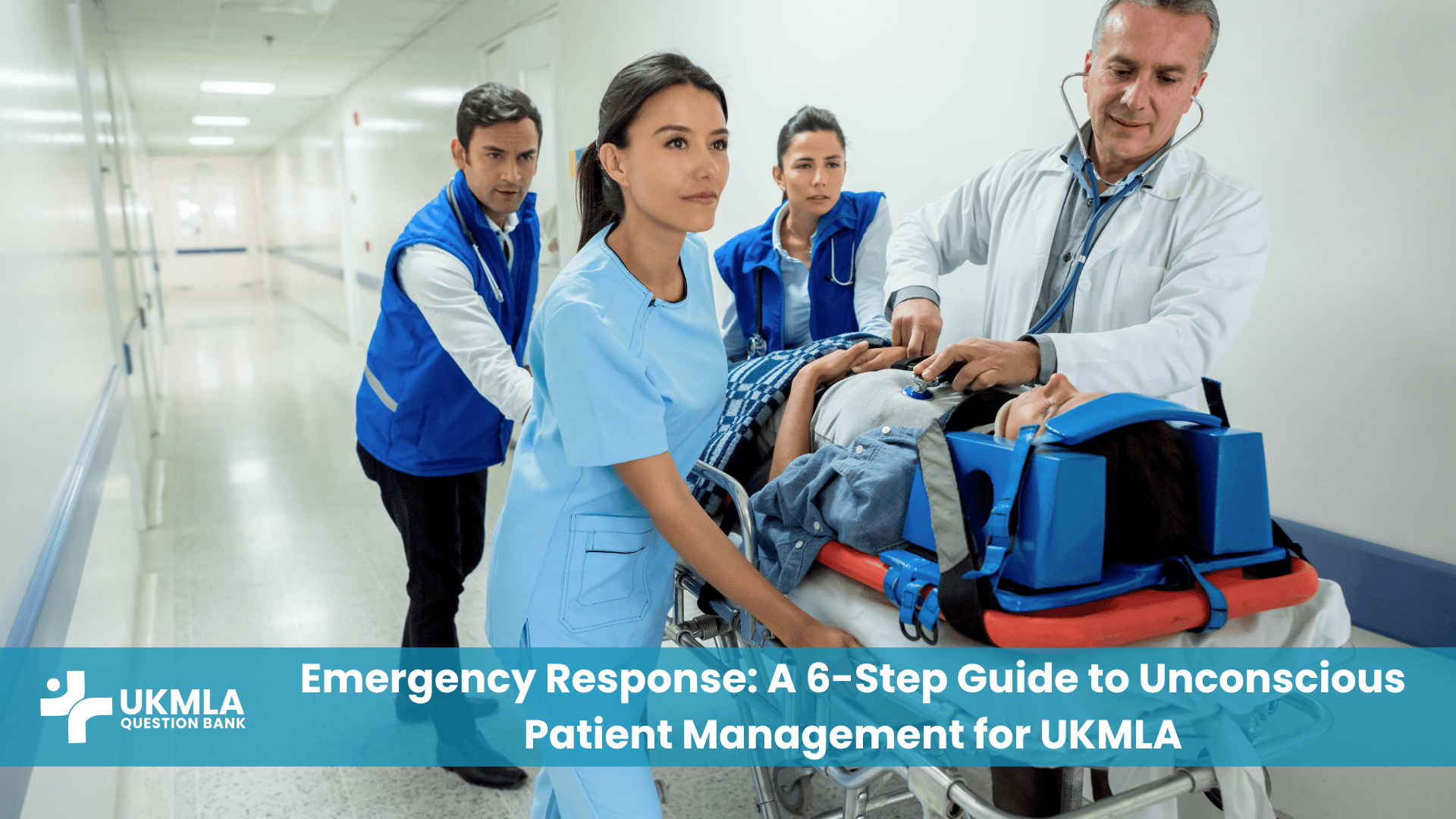
Encountering an unconscious patient is one of the most critical scenarios a junior doctor can face. Effective unconscious patient management UKMLA requires a rapid, systematic assessment to identify and treat life-threatening conditions while simultaneously working towards a differential diagnosis. Whether in A&E, on the ward, or during a simulation, your ability to apply a structured approach like ABCDE is paramount.
This guide provides an essential 6-step framework for the initial response to an unconscious adult patient, tailored for UKMLA candidates. We’ll cover the immediate priorities, a useful mnemonic for differential diagnosis (AEIOU-TIPS), key investigations, and how to apply this knowledge in exam-style scenarios. This builds upon core principles outlined in Emergency Medicine Essentials for UKMLA: Critical Presentations & (AKT & CSPA) Focus.
Table of Contents
ToggleKey Takeaways
ABCDE is Paramount: The immediate priority is always the systematic ABCDE assessment (Airway, Breathing, Circulation, Disability, Exposure) to identify and treat life-threatening problems.
Assess Consciousness Level: Use the Glasgow Coma Scale (GCS) to objectively measure the level of unconsciousness and monitor trends. A GCS of 8 or less often indicates the need for definitive airway management.
Broad Differential: Keep a wide differential diagnosis using a mnemonic like “AEIOU-TIPS” (Alcohol, Epilepsy/Electrolytes, Insulin, Opiates/Overdose, Uraemia – Trauma/Temperature, Infection, Psychiatric/Poisons, Stroke/Shock/SAH).
Key Initial Investigations: Bedside glucose, ABG/VBG, ECG, basic bloods (FBC, U&Es, LFTs, CRP, coagulation), and consider CT head early if trauma, focal neurology, or raised ICP is suspected.
Treat Reversible Causes: Immediately address reversible causes identified during the initial assessment (e.g., hypoglycaemia with glucose, opiate overdose with naloxone, hypoxia with oxygen).
Why Mastering Unconscious Patient Management UKMLA Demands
Responding effectively to an unconscious patient tests core medical competencies – systematic assessment, clinical reasoning, and timely intervention – all crucial for the UKMLA.
The AKT Context: Recognising Causes and Prioritising Actions
In the Applied Knowledge Test (AKT), questions will often present a scenario involving an unconscious patient and ask you to identify the most likely cause based on limited information (e.g., pinpoint pupils suggesting opiate overdose) or select the single most important next step in management (e.g., securing the airway).
The CPSA Context: Demonstrating Safe Emergency Assessment (ABCDE)
The Clinical and Professional Skills Assessment (CPSA) is highly likely to feature stations involving acutely unwell or unconscious simulated patients. You will be expected to demonstrate a slick, safe ABCDE approach, correctly identify immediate life threats, perform basic interventions (like airway manoeuvres), interpret vital signs and bedside tests, and communicate effectively with seniors or the resuscitation team.
The Essential 6-Step Initial Response Framework
When faced with an unconscious patient, revert to this systematic approach.
Step 1: Safety & Initial Assessment (DRS ABCD)
Danger: Ensure the scene is safe for you and the patient.
Response: Check for responsiveness (shout and gently shake). If unresponsive, shout for help immediately.
Shout for Help: Alert colleagues / call the resuscitation team (e.g., 2222 call).
Airway: Open the airway (head-tilt/chin-lift or jaw thrust if C-spine injury suspected). Check for obstruction.
Breathing: Look, listen, and feel for breathing (up to 10 seconds). If not breathing normally, start CPR. If breathing, proceed to full ABCDE.
Step 2: Airway & Breathing
Airway: Re-assess. Is it clear and maintained? Consider basic adjuncts (oropharyngeal/nasopharyngeal airway). Listen for added sounds (gurgling, snoring). Suction if needed. A GCS ≤ 8 often requires definitive airway management (intubation).
Breathing: Assess respiratory rate, depth, effort, symmetry. Check oxygen saturation (SpO2). Auscultate lung fields. Provide high-flow oxygen via a non-rebreathe mask (aim SpO2 94-98%, or 88-92% if at risk of hypercapnic respiratory failure). Consider assisted ventilation (bag-valve-mask) if breathing is inadequate. Check tracheal position.
Step 3: Circulation
Assess: Pulse (rate, rhythm, character), blood pressure, capillary refill time (CRT), heart sounds, JVP, peripheral temperature. Look for signs of shock (pallor, sweating).
Action: Secure IV access (x2 large-bore cannulae). Take bloods (see Step 6). Consider an IV fluid bolus (e.g., 500ml crystalloid stat) if hypotensive/shocked, unless cardiogenic cause suspected. Attach ECG monitor.
Step 4: Disability
Assess Consciousness: Calculate the Glasgow Coma Scale (GCS) score (Eyes/Verbal/Motor). Assess pupil size, equality, and reactivity to light.
Check Glucose: IMMEDIATE bedside capillary blood glucose test. Hypoglycaemia is a common, rapidly reversible cause of unconsciousness. Treat urgently if low (e.g., IV glucose).
Temperature: Check core body temperature (hypo/hyperthermia can cause unconsciousness).
Step 5: Exposure & Environment
Expose: Fully expose the patient (respecting dignity) to look for injuries (especially head trauma), rashes (meningococcal sepsis, drug reactions), needle marks, medical alert bracelets/necklaces, signs of incontinence.
Environment: Check surroundings for clues (pill packets, alcohol bottles, insulin pens, environmental hazards). Control temperature (warm blankets if hypothermic).
Step 6: Targeted Investigations & Immediate Treatments
Bedside: Glucose (already done), ABG/VBG (acidosis, hypoxia, hypercapnia, lactate), ECG (arrhythmias, MI, electrolyte changes).
Bloods (taken at C): FBC, U&Es, LFTs, Glucose (lab), Calcium, Magnesium, Phosphate, CRP, Coagulation screen, Troponin, Toxicology screen (if suspected overdose), Blood cultures (if febrile/sepsis suspected). Consider Ammonia (liver failure), Cortisol (Addison’s).
Immediate Treatments: Treat reversible causes found (Hypoglycaemia, Hypoxia, Opiate overdose – Naloxone, Wernicke’s prophylaxis – IV Pabrinex if alcohol suspected/malnourished). Insert urinary catheter if retention suspected or for fluid balance monitoring. Consider NG tube (after airway secured if low GCS).
Differential Diagnosis of the Unconscious Patient: AEIOU-TIPS
Once immediate life threats are addressed, consider the underlying cause. This popular mnemonic helps structure your thinking. You can find similar approaches in resources like the Severn Deanery Emergency Medicine guide.
A – Alcohol, Acidosis
Alcohol: Intoxication is common. Check breath/history. Also consider alcohol withdrawal.
Acidosis: Metabolic (DKA, lactic acidosis, renal failure, toxins) or Respiratory (COPD, respiratory depression). Check ABG/VBG.
E – Epilepsy (post-ictal), Electrolytes, Endocrine
Epilepsy: Post-ictal state after a seizure. Check for tongue biting, incontinence, witness reports. Consider non-convulsive status epilepticus if prolonged.
Electrolytes: Severe hyponatraemia, hypernatraemia, hypercalcaemia, hypomagnesaemia. Check U&Es, Ca, Mg.
Endocrine: Hypoglycaemia (see ‘I’), Addisonian crisis (low BP, low Na+, high K+), Myxoedema coma (hypothyroid), Hyperosmolar Hyperglycaemic State (HHS).
I – Insulin (Hypoglycaemia)
Hypoglycaemia: Critically important reversible cause. Always check bedside glucose immediately. Caused by insulin/sulfonylurea excess, missed meals, sepsis, liver failure, Addison’s.
O – Opiates, Other Overdoses/Poisons
Opiates: Classic triad: Respiratory depression, pinpoint pupils, reduced consciousness. Responds rapidly to Naloxone. (See A High-Yield Guide to Managing Common Drug Overdoses for the UKMLA).
Other Overdoses: Benzodiazepines, tricyclics, salicylates, ethylene glycol, methanol etc. Check toxicology screen if suspected.
U – Uraemia, Underactive Thyroid (Myxoedema Coma)
Uraemia: Severe kidney failure. Check U&Es.
Myxoedema Coma: Severe hypothyroidism. Look for hypothermia, bradycardia.
T – Trauma (Head Injury), Temperature
Trauma: Intracranial haemorrhage (subdural, extradural), diffuse axonal injury. Look for external signs. Maintain C-spine immobilisation if suspected. Urgent CT head.
Temperature: Hypothermia (<35°C) or Hyperthermia (>40°C, e.g., heatstroke, neuroleptic malignant syndrome, serotonin syndrome).
I – Infection
Systemic: Sepsis causing reduced cerebral perfusion or metabolic disturbance. (See Mastering Sepsis Management UKMLA: From Recognition to the Sepsis Six).
CNS: Meningitis, Encephalitis. Look for fever, neck stiffness, rash, seizures. Requires LP (if no contraindications).
P – Psychiatric (Psychogenic), Poisons
Psychogenic: Psychogenic non-epileptic seizures (PNES), conversion disorder. Diagnosis of exclusion. May resist eye opening, normal pupil response, normal GCS fluctuation.
Poisons: Carbon monoxide, cyanide, organophosphates. Consider environmental context.
S – Stroke, Shock, Subarachnoid Haemorrhage (SAH), Seizure (Status)
Stroke: Large ischaemic stroke (e.g., MCA occlusion), brainstem stroke, haemorrhagic stroke. Look for focal neurological signs (if assessable). Urgent CT head. (See Neurology essentials for UKMLA: 7 high-yield syndromes and AKT diagnostic approaches).
Shock: Any cause of severe circulatory failure (hypovolemic, cardiogenic, septic, anaphylactic) leading to reduced cerebral perfusion.
SAH: Sudden onset headache (‘thunderclap’) often precedes loss of consciousness. CT head +/- LP.
Seizure: Ongoing subtle status epilepticus or post-ictal state.
Table 1: AEIOU-TIPS Mnemonic for Unconsciousness Causes
| Mnemonic | Key Differentials |
|---|---|
| A | Alcohol, Acidosis (Metabolic/Respiratory) |
| E | Epilepsy (post-ictal/status), Electrolytes (Na+, Ca++), Endocrine (Addison’s, Myxoedema, HHS) |
| I | Insulin (Hypoglycaemia) |
| O | Opiates, Other Overdoses/Poisons |
| U | Uraemia, Underactive Thyroid (Myxoedema) |
| T | Trauma (Head Injury), Temperature (Hypo/Hyperthermia) |
| I | Infection (Sepsis, Meningitis, Encephalitis) |
| P | Psychiatric (Psychogenic), Poisons (CO, Cyanide) |
| S | Stroke, Shock, Subarachnoid Haemorrhage (SAH), Seizure (status) |
Key Initial Investigations and Their Significance
Prioritise tests that identify reversible causes or guide immediate management.
Bedside Tests (Glucose, ABG/VBG, ECG)
Glucose: Mandatory first test. Excludes/confirms hypoglycaemia.
ABG/VBG: Assesses oxygenation (PaO2), ventilation (PaCO2), acid-base status (pH, HCO3-, BE), lactate (tissue hypoperfusion), electrolytes (K+). Essential for diagnosing acidosis, respiratory failure, electrolyte disturbances.
ECG: Checks for arrhythmias (brady/tachy), MI, features of electrolyte imbalance (hyperkalaemia), TCA overdose (wide QRS, long QT).
Blood Tests (FBC, U&Es, LFTs, CRP, Coag, Calcium, Mag, Tox Screen?)
FBC: Anaemia (reduced O2 carrying), high/low WCC (infection), low platelets (bleeding risk/DIC).
U&Es: Renal failure (uraemia), electrolyte disturbances (Na+, K+).
LFTs: Liver failure (hepatic encephalopathy).
CRP: Marker of inflammation/infection.
Coagulation Screen: DIC, liver disease, anticoagulant effect.
Calcium, Magnesium, Phosphate: Electrolyte causes of altered consciousness.
Toxicology Screen: If overdose suspected (paracetamol, salicylate levels often sent routinely).
Consider: Ammonia (liver failure), Cortisol (Addison’s), Thyroid function (Myxoedema).
Imaging (CT Head – Indications)
Primary Investigation: If trauma, focal neurological signs, signs of raised ICP (papilloedema, Cushing’s triad), sudden onset (SAH?), or GCS persistently low without clear cause.
Timing: Perform early if indicated, but after initial ABCDE stabilisation.
Other (Lumbar Puncture?, Blood Cultures?, Urine Dip?)
Lumbar Puncture (LP): Only after CT head excludes raised ICP/mass lesion if meningitis/encephalitis or SAH (with negative CT) suspected.
Blood Cultures: Essential if fever/sepsis suspected (take before antibiotics if possible).
Urine Dipstick/Toxicology: Can provide clues (ketones in DKA, drugs).
Table 2: Essential Initial Investigations in the Unconscious Patient
| Test Category | Key Tests | Primary Rationale |
|---|---|---|
| Bedside | Capillary Glucose, ABG/VBG, ECG | Rule out hypo, assess oxygenation/acid-base, check rhythm/ischaemia/electrolytes. |
| Core Bloods | FBC, U&Es, LFTs, CRP, Coagulation, Ca/Mg/PO4, Lab Glucose | Check for infection, renal/liver failure, electrolytes, bleeding risk. |
| Specific Bloods (Context-dependent) | Toxicology screen, Paracetamol/Salicylate levels, Ammonia, Cortisol, TFTs, Blood Cultures | Investigate overdose, specific endocrine causes, sepsis. |
| Imaging | CT Head | Rule out intracranial bleed, stroke, mass lesion, signs of raised ICP (especially if trauma/focal signs). |
| Other | Lumbar Puncture (after CT if indicated), Urine dipstick/toxicology | Investigate CNS infection/SAH, look for urinary clues. |
Putting It All Together: 2 UKMLA-Style Clinical Scenarios
Case 1: The Young Patient Found Unresponsive (Overdose?)
Vignette: A 22-year-old is brought to A&E by friends who found them unresponsive. Empty blister packs are nearby. On assessment: GCS 5 (E1 V1 M3), pupils pinpoint, respiratory rate 6/min, shallow. SpO2 85% on air. HR 50, BP 90/60.
6-Step Response:
Safety, Check Response (Unresponsive), Shout for Help.
Airway: Open (jaw thrust), looks clear. Breathing: RR 6, shallow. Action: High-flow O2 via non-rebreathe mask + assist ventilation with bag-valve-mask.
Circulation: HR 50, BP 90/60. Action: IV access, bloods, consider fluid bolus.
Disability: GCS 5, Pupils pinpoint & reactive. Glucose: 5.5 mmol/L. Temp 36.0°C.
Exposure: No injuries. Needle marks noted on arms.
Initial Ix/Rx: ABG shows respiratory acidosis. ECG sinus bradycardia. Diagnosis: Clinical picture classic for Opiate Overdose. Action: Administer IV Naloxone urgently. Continue airway/breathing support. Send toxicology screen.
Key Learning: Recognise the opiate toxidrome and prioritise airway/breathing alongside specific antidote (Naloxone).
Case 2: The Elderly Patient with Reduced GCS and Fever (Sepsis/Meningitis?)
Vignette: An 80-year-old nursing home resident is brought in with a 1-day history of confusion and lethargy. Temp 38.5°C, HR 110, BP 95/55, RR 24. GCS 11 (E3 V3 M5). Neck stiffness noted.
6-Step Response:
Safety, Check Response (Responds to voice), Shout for Help (Medical emergency team?).
Airway: Patent. Breathing: RR 24, SpO2 96% on air. Action: High-flow O2.
Circulation: HR 110, BP 95/55, CRT 3s. Action: IV access x2, bloods (inc. cultures), start IV fluid resuscitation (sepsis suspicion).
Disability: GCS 11, Pupils equal/reactive. Glucose: 6.8 mmol/L. Temp 38.5°C. Neck stiffness ++.
Exposure: No rash or injuries. Looks unwell.
Initial Ix/Rx: ABG (check lactate/acidosis). Bloods sent. Diagnosis: High suspicion of Sepsis, likely source CNS (Meningitis) given fever, reduced GCS, neck stiffness. Action: Administer IV antibiotics (+/- antivirals/steroids) immediately as per meningitis guidelines (do NOT delay for imaging/LP if critically ill). Discuss urgently with seniors regarding need for CT head before considering LP.
Key Learning: Recognise sepsis early. In suspected meningitis, treat empirically without delay. LP is important but secondary to immediate resuscitation and antibiotics. Consider CT head first if any signs of raised ICP/focal neurology.
SBAR Handover Example (Unconscious Patient)
Situation: “Dr. Smith, I’m calling about Mr. Jones in Bed 5, a 65-year-old man who became acutely unresponsive 10 minutes ago.” Background: “He was admitted yesterday with pneumonia. His GCS is now 7 (E1 V2 M4), pupils are equal. Initial obs: RR 28, SpO2 90% on 4L, HR 120, BP 85/50.” Assessment: “ABCDE assessment done.
Airway maintained with jaw thrust, high-flow O2 applied, SpO2 now 95%. IV access obtained, fluids running. Bedside glucose is 8.0. ECG shows sinus tachycardia. He appears shocked, likely septic.” Recommendation: “I need you to review him urgently. I’ve taken bloods including cultures. Should I proceed with the next step of the Sepsis Six pathway (antibiotics) now?”
Frequently Asked Questions (FAQ) about Unconscious Patient Management
The capillary blood glucose test is arguably the single most critical immediate bedside test. Hypoglycaemia is a common cause of unconsciousness, it’s rapidly fatal if untreated, and it’s completely reversible with prompt glucose administration. It should be checked within minutes of identifying reduced consciousness.
The decision to intubate is clinical, but a common guideline is GCS ≤ 8. This indicates the patient likely cannot protect their own airway, increasing the risk of aspiration. Other indications include inadequate respiratory effort despite oxygen/basic airway manoeuvres, severe hypoxia or hypercapnia, or the need for airway control during procedures (like CT scan) or transfers. This decision should always involve senior input (Anaesthetics/ITU).
Cushing’s triad is a late and ominous sign of significantly raised intracranial pressure (ICP), often heralding brain herniation. The triad consists of: 1) Hypertension (often with a widened pulse pressure), 2) Bradycardia, and 3) Irregular Respirations (e.g., Cheyne-Stokes breathing). Its presence is a strong contraindication to lumbar puncture before imaging.
If trauma is suspected as the cause of unconsciousness (e.g., fall, RTA), cervical spine immobilisation (manual in-line stabilisation initially, then collar and blocks) is crucial during the ABCDE assessment until injury is excluded. A CT head and C-spine become high priorities after initial stabilisation. The mechanism of injury becomes a key part of the history.
Naloxone is the specific antidote for opiate overdose. In an unconscious patient with respiratory depression (low RR, low SpO2) and pinpoint pupils, a trial of IV Naloxone is often given diagnostically and therapeutically. A rapid improvement in GCS and respiratory effort strongly supports opiate toxicity. However, it has a short half-life, and repeated doses or an infusion may be needed. It won’t harm patients unconscious for other reasons (though can precipitate withdrawal in opioid-dependent individuals).
Intravenous Thiamine (usually given as Pabrinex) is essential to prevent Wernicke’s encephalopathy in patients at risk of thiamine deficiency before giving glucose. This primarily includes patients with known or suspected alcohol dependence or malnutrition. In an undifferentiated unconscious patient where these are possibilities, it is good practice to administer IV Pabrinex prior to or alongside IV glucose.
Psychogenic unresponsiveness (previously pseudo-coma) is a diagnosis of exclusion where a patient appears unconscious due to a psychiatric cause (e.g., conversion disorder) rather than an organic pathology. Clues might include active resistance to eye opening, fluttering eyelids, turning the head away during examination, normal pupillary responses, normal vital signs and investigations, variable GCS, and sometimes bizarre movements or postures. However, organic causes must always be thoroughly ruled out first.
Pupillary examination is a key part of the ‘Disability’ assessment. Size, symmetry, and reactivity to light provide vital clues:
Pinpoint pupils: Opiate overdose, pontine haemorrhage.
Mid-sized, fixed pupils: Midbrain damage.
Dilated, fixed pupils (unilateral or bilateral): Suggests severe brain injury, herniation (e.g., CN III compression), or certain drug effects (e.g., TCAs).
Asymmetrical pupils: Suggests focal neurological lesion/raised ICP.
While typically used in cardiac arrest (PEA/Asystole), the reversible ‘Hs and Ts’ overlap significantly with causes of unconsciousness and should be considered during the assessment: Hypoxia, Hypovolemia, Hypo/Hyperkalemia (& metabolic), Hypothermia; Thrombosis (MI/PE), Tamponade, Toxins, Tension pneumothorax. Addressing these is key to management.
The foundation is the Resuscitation Council UK’s ABCDE approach for immediate assessment. Specific management then depends on the suspected cause. Resources like the Severn Deanery Emergency Medicine guide provide a practical framework covering differentials and initial steps relevant to UK emergency practice. NICE guidelines cover specific causes like stroke, meningitis, head injury, and poisoning.
Conclusion
The successful unconscious patient management UKMLA requires is built on a foundation of rapid, systematic assessment using the ABCDE approach. This allows for immediate identification and treatment of life-threatening issues while gathering clues towards the underlying cause. Employing a structured differential diagnosis mnemonic like AEIOU-TIPS ensures a broad range of possibilities are considered, guiding appropriate initial investigations.
Always prioritise airway, breathing, and circulation, check glucose immediately, and use the GCS for objective assessment. Remember the importance of treating reversible causes promptly. Continued practice in simulated environments and real clinical settings will build the confidence and competence needed to manage this critical emergency effectively.
Your Next Steps
Master ABCDE: Practice the ABCDE approach until it is automatic. This is your safety net.
Learn GCS: Be able to calculate and interpret the Glasgow Coma Scale quickly and accurately.
Know AEIOU-TIPS: Use this mnemonic to practice generating differentials for unconsciousness.
Recognise Reversible Causes: Focus on rapidly identifying and treating hypoglycaemia, opiate overdose, hypoxia, and shock.
Review Specific Conditions: Revisit guides on Sepsis, Stroke/SAH, and Overdoses as common causes.
Practice Simulation: Utilise clinical skills labs or simulation training to practice managing an unconscious patient scenario. Consult resources like the Severn Deanery guide for structured approaches.